

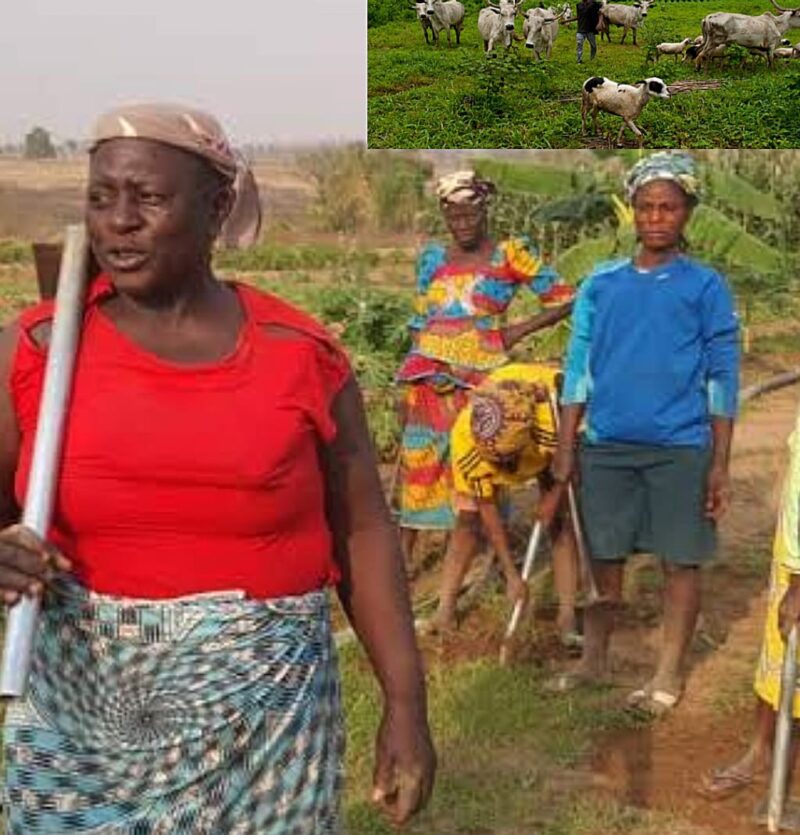
When we speak about Women, Peace and Security (WPS), we often focus on negotiation tables and conflict zones, yet the real frontline of insecurity is also in our farms, where smallholder women farmers (SHWFs) navigate violence, climate shocks, and systemic exclusion while feeding the nation.
The WPS agenda is often framed within armed conflict and post-conflict recovery. Insecurity experienced by SHWFs extends far beyond conventional conflict settings. It is embedded in structural inequalities such as exclusion from land rights, limited participation in decision-making spaces, climate shocks, post-harvest losses, farm theft, herder-related violence, sexual and gender-based violence (SGBV) among others.
Smallholder women farmers (SHWFs) constitute 60–70% of Nigeria’s agricultural labour force and play a critical role in food production and household livelihoods. However, they remain underrepresented in leadership and policy processes shaping agriculture, climate action, and peacebuilding, while weak governance, insecurity, climate shocks continue to undermine their safety, livelihoods, and economic opportunities.
These realities demonstrate that food security is not only an agricultural issue but also a peace and security concern. Climate stress, resource competition, displacement, and persistent post-harvest losses are reshaping rural economic landscapes, increasing vulnerability, and reinforcing cycles of poverty and fragility.
A more inclusive WPS approach is therefore needed, one that recognizes SHWFs as agents of change rather than merely victims of insecurity. Strengthening women’s leadership and meaningful participation in decision-making, protecting livelihoods, improving accountability systems, and investing in climate-resilient agriculture, post-harvest management are essential for resilient communities, sustainable food systems, and lasting peace.
As Nigeria advances the WPS agenda and SDGs 5 and 16, there is an urgent need to amplify SHWFs’ voices. Their leadership is key to reducing inequalities, strengthening food security, and advancing sustainable peace.