At ActionAid we are committed to raising awareness about sexual harassment, exploitation, abuse, and other harms – and to taking action to prevent harm. By completing this course, you will develop a basic understanding of ActionAid’s SHEA and safeguarding approach. You will explore diverse SHEA and safeguarding issues that can arise in humanitarian and development...
ActionAid Nigeria, with funding from Global Affairs Canada, through the Renewed Women’s Voice and Leadership Project, announces a Call for Expression of Interest for Strategic Opportunity Funding. This fund is established to support timely, strategic, and impactful interventions that advance the rights of women and girls in Nigeria. Issuing Organization: ActionAid NigeriaDonor: Global Affairs CanadaProject:...
ActionAid Nigeria (AAN), with funding from Global Affairs Canada (GAC), through the Renewed Women’s Voice and Leadership (RWVL) Project, is pleased to announce a Call for Expression of Interest for Strategic Innovation Funding (SIF) to support creative and innovative interventions aimed at advancing the rights of women and girls in Nigeria. Issuing Organization: ActionAid Nigeria...
ActionAid Nigeria invites Expressions of Interest from eligible Women’s Rights Organizations to participate in the Renewed Women’s Voice and Leadership Project. Issued by: ActionAid Nigeria (AAN)Donor: Global Affairs Canada (GAC)Project: Renewed Women’s Rights and Leadership (RWVL) Project Project Location(s): Benue and Imo States The Renewed Women’s Voice and Leadership (RWVL) Project ActionAid Nigeria with funding from...
Across Nigeria, climate change is not just an environmental crisis—it is a social justice issue with a deeply gendered impact. Floods, droughts, desertification, and rising food insecurity are realities that millions face, but for women—particularly rural women farmers—the burden is doubled. They are expected to feed their families, sustain local economies, and adapt to increasingly...
Every year on October 17, the International Day for the Eradication of Poverty serves as a powerful reminder of the urgent global commitment needed to end deprivation and systemic inequality. For millions of women and girls, poverty is not merely a lack of income; it is the brutal consequence of deep-rooted gender injustice, restricted opportunities,...
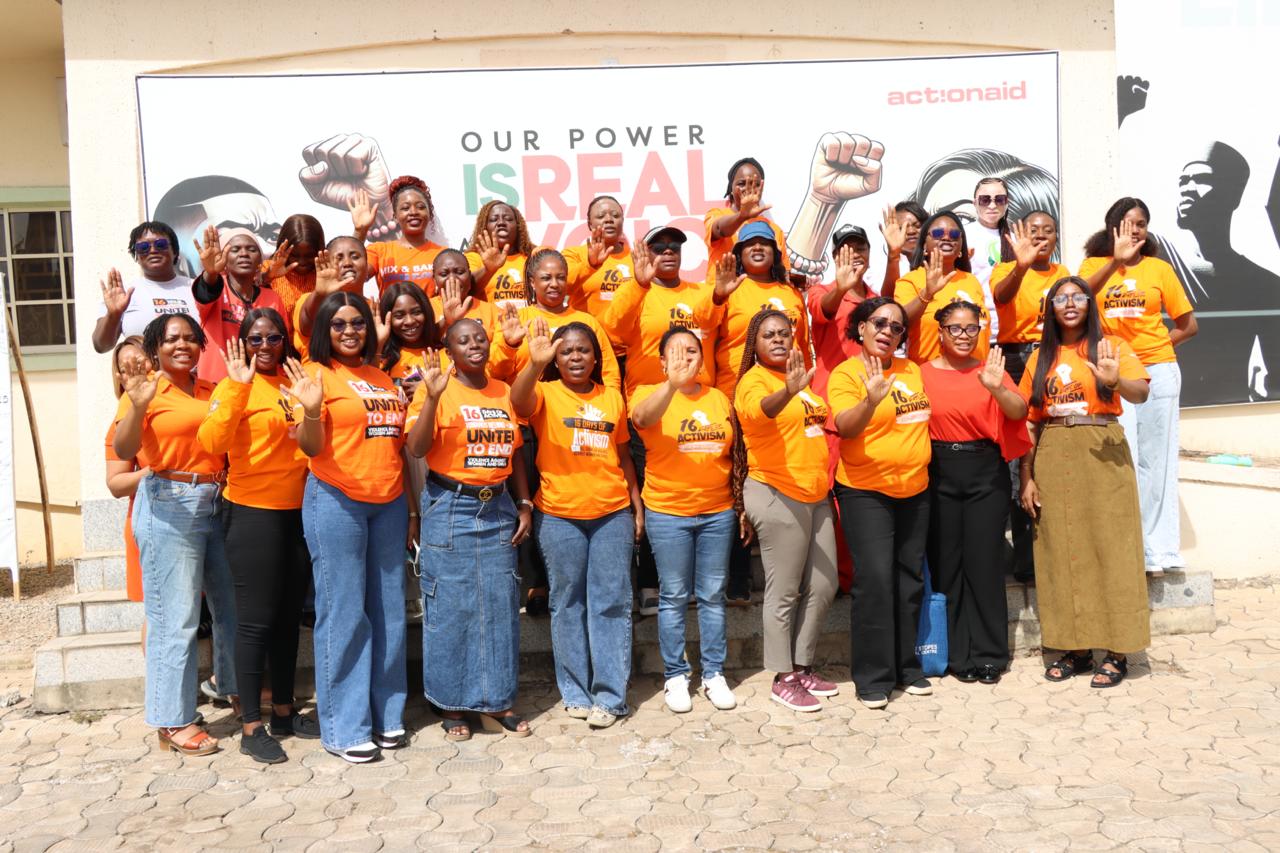
Every year, from the 25th of November to the 10th of December, the world marks 16 Days of Activism Against Gender-Based Violence. It is a global movement that brings governments, civil society organisations, activists, communities, and individuals together to demand an end to all forms of violence against women and girls. For more than many...
This research, conducted by teenage girls in Nigeria and Sierra Leone, highlights the critical challenges faced by adolescent girls, including child marriage, education barriers, gender-based violence, menstrual health issues, and economic exclusion. The study emphasizes the need for a decolonial research approach that recognizes girls as agents of change, rather than passive beneficiaries. By centering...
This groundbreaking report presents findings from a girl-led research initiative conducted in Nigeria (Abuja and Jigawa) and Sierra Leone (Freetown). Led by teenage girl researchers, the study highlights key challenges affecting girls, including education barriers, gender-based violence, menstrual health issues, child marriage, and economic exclusion. The report calls for a shift in narratives—positioning girls as...
This policy brief explores the funding landscape for gender and women’s rights in Nigeria, highlighting key trends, challenges, and advocacy points. It examines how donor funding is allocated, the effectiveness of grants for gender-focused initiatives, and the gaps that hinder sustainable progress. With only a fraction of humanitarian aid directly benefiting women’s rights, the report...