
Every year on October 17, the International Day for the Eradication of Poverty serves as a powerful reminder of the urgent global commitment needed to end deprivation and systemic inequality.
For millions of women and girls, poverty is not merely a lack of income; it is the brutal consequence of deep-rooted gender injustice, restricted opportunities, and unequal systems. Across Nigeria, women and girls face the harshest realities of this crisis. From remote rural areas to dense urban slums, they are frequently denied access to quality education, decent work, essential healthcare, and participation in vital decision-making spaces. When crises hit, whether economic shocks, conflicts, or climate disasters, women and girls inevitably bear the heaviest burden. At ActionAid Nigeria, we reject the notion that poverty is inevitable. We know it is a failure of unequal systems that must be changed. The key to ending this cycle is the radical empowerment of women and girls, because when women thrive, entire communities are uplifted and transformed.
Poverty truly has a woman’s face. Global reports consistently show that women constitute the majority of those living in extreme poverty. In Nigeria, pervasive social norms and patriarchal structures severely limit women’s access to and control over productive assets like land, education, and financial resources. This economic exclusion perpetuates a destructive cycle of dependency and vulnerability. Crucially, when girls are denied education, they are more likely to be married early, face devastating gender-based violence, and remain trapped in intergenerational poverty. Conversely, when girls are educated, they earn higher incomes, marry later, and are far better equipped to support and elevate their families and communities. Empowering girls through education, skill-building, and leadership is the most effective way to break this vicious cycle.
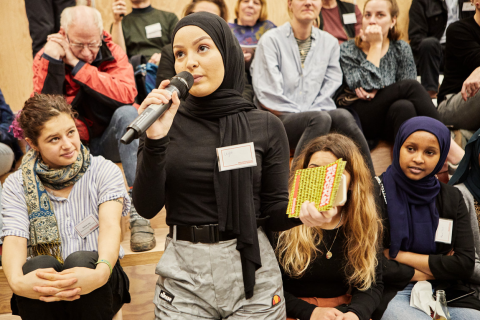
ActionAid Nigeria’s work consistently demonstrates that women are not just victims of poverty, they are the key drivers of sustainable change. Through our women’s rights programmes, such as the Renewed Women’s Voice and Leadership (RWVL) Project, we support grassroots women to organise, advocate effectively, and demand clear accountability from duty bearers. In our partner communities, women are actively leading cooperatives, advocating successfully for improved social services, and courageously challenging gender-based violence. By strengthening women’s leadership and participation, we are fundamentally building a future where women have power over their bodies, their resources, and their voices.
However, to truly eradicate poverty, this grassroots empowerment must be matched by structural change, and we must fiercely advocate for economic justice—a world where women have equal access to productive resources, fair wages, and robust social protection. This requires a focused prioritisation of investments in women-led enterprises, expanding access to credit, and ensuring safe, dignified spaces for women in every sector of the labour market. Furthermore, governments must urgently address the immense unpaid care work that women perform daily, the work that sustains families and economies but remains frustratingly invisible and undervalued in policy and budgeting.
This year’s theme, “Putting Dignity in Practice for All: Ending Poverty Everywhere,” calls on every stakeholder, governments, civil society, and individuals, to urgently reaffirm our shared commitment to justice and equality. At ActionAid Nigeria, we are working hand-in-hand with women, girls, and communities to dismantle the structural barriers that keep people poor. Our vision is a Nigeria free from poverty and injustice, where every girl can dream without limits, and every woman can live with dignity, security, and freedom. Poverty is not just about lack of resources, it is fundamentally about the lack of rights. And until women and girls have equal access to those rights, poverty will persist. Let us stand with girls and women everywhere this International Day for the Eradication of Poverty, because their empowerment is not only the key to ending poverty but also the transformation of our world.