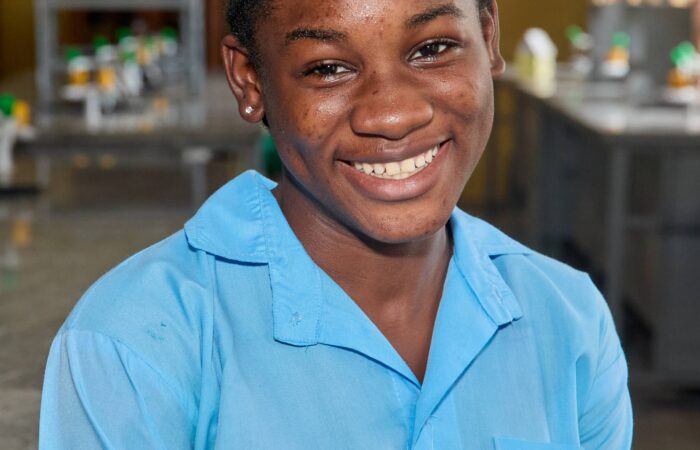

In Pigba Sama, a community in the Federal Capital Territory, many girls face challenges that affect their daily lives, especially from accessing inheritance to managing menstrual health. Among those determined to make a difference are Favour Usman, a 20-year-old student of Nasarawa state University, and Precious Josiah, and 18-year-old who has recently finished secondary school and is awaiting university admission. Both girls were trained as researchers through ActionAid Nigeria’s Girl-Led Research Project, which equips young girls to investigate the issues they and their peers face, and to advocate for practical solutions. Through the project, Favour and Precious have taken on the responsibility of not only gathering information from girls, women, boys, and community leaders but also creating strategies that address education barriers, unequal inheritance sharing, menstrual hygiene, and other challenges affecting girls in Pigba Sama.
This community is led by Chief Zakumi James, whose decisions shape many aspects of community life. Before the Girl-Led Research (GLR) Project was introduced in the community, girls faced numerous challenges such as limited access to education, poor menstrual hygiene management, and a lack of platforms to gather and express their concerns. One of the major issues identified during this project was the unequal sharing of inheritance. Traditionally, girls and women were excluded from inheriting property or family resources because of their gender, limiting their economic independence and access to education. Studies within the community also revealed that women were significantly less wealthy than men.
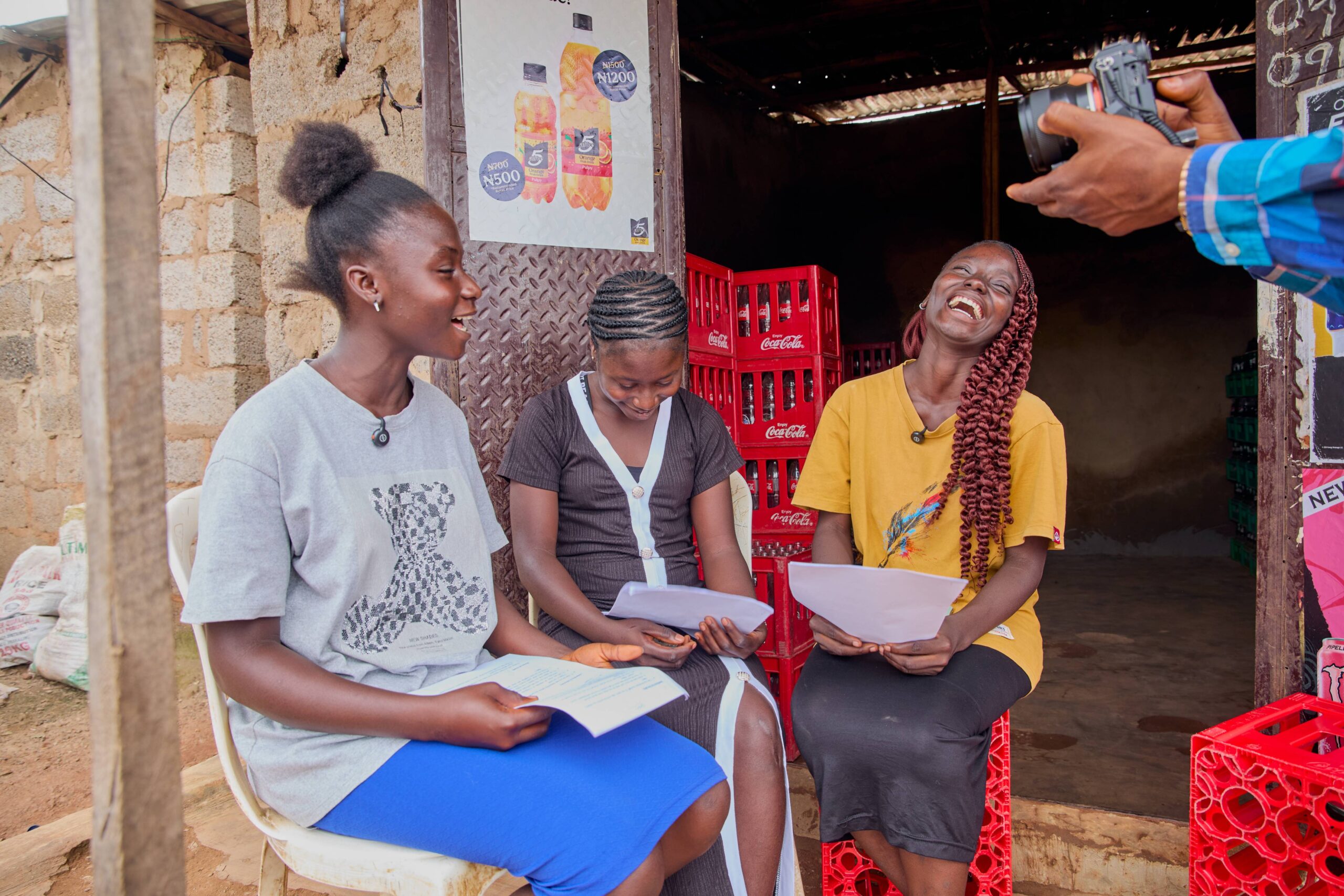
When the GLR Project kickstarted in the community, girls like Favour and Precious were trained as researchers. They carried out research in the community, engaging girls, women, boys, parents, and community leaders to document these challenges, and organised activities that could help in bridging the gaps that they found. One of the most significant activities was the intergenerational dialogue, where girls, their allies, and community leaders sat together to discuss sensitive issues like inheritance sharing and girls’ rights. Initially, there were tensions, the girls faced resistance from some community elders and even encountered challenges when they tried to hold meetings at the chief’s palace due to security concerns and skepticism about their intentions. However, over time, the dialogue helped the chief and other leaders understand the impact of excluding girls from inheritance and the importance of supporting girls’ education and empowerment. This experience changed Chief Zakumi James’s perspective, making him more supportive of equitable inheritance and more willing to listen to and advocate for girls in the community.
Chief Zakumi James’s outlook to the issue of girls has changed significantly since the introduction of the Girl-Led Research (GLR) Project. After witnessing how confidently the girls, including Favour and Precious, spoke up during community dialogues, he became more aware of the realities girls face and more open to conversations about their rights. He expressed admiration for their courage and now actively advocates for the education of all girls in the Pigba Sama community. For him, seeing girls lead discussions, challenge cultural barriers, and propose practical solutions to issues like menstrual hygiene and inheritance was eye-opening. It made him realize that empowering girls benefits not only them but also the community at large.
Initially, the chief considered inheritance sharing to be a family matter that did not require his intervention unless a woman brought a complaint before him. According to him, he could only act when such cases were formally reported, but many women, out of fear or cultural restraint, rarely spoke up. In his view, since no one had complained, there was no problem. However, through sustained engagement and dialogue with the GLR team, he came to understand that silence does not mean the absence of injustice.
Today, Chief James has made his palace a safe space for women and girls in the community. He has assured them that any inheritance-related and non-inheritance related complaints brought before him will be treated seriously and referred to his council of chiefs for resolution. He now believes that while he would not advocate for an equal 50-50 inheritance split between men and women, because he strongly believes that women also benefit from their husbands’ inheritance after marriage, they must still be included in inheritance discussions and given a fair, meaningful share.
Chief James now uses his influence to encourage other traditional rulers to create space for women’s voices in community matters. He advises fellow traditional leaders to listen to girls in their communities, give them space to speak, and support initiatives that empower them. This transformation demonstrates the wider impact of the GLR Project in Pigba Sama, one that has built the confidence of girls like Favour and Precious and inspired other traditional leaders to reconsider traditional practices, paving the way for a more equitable and inclusive community.